


Introduction
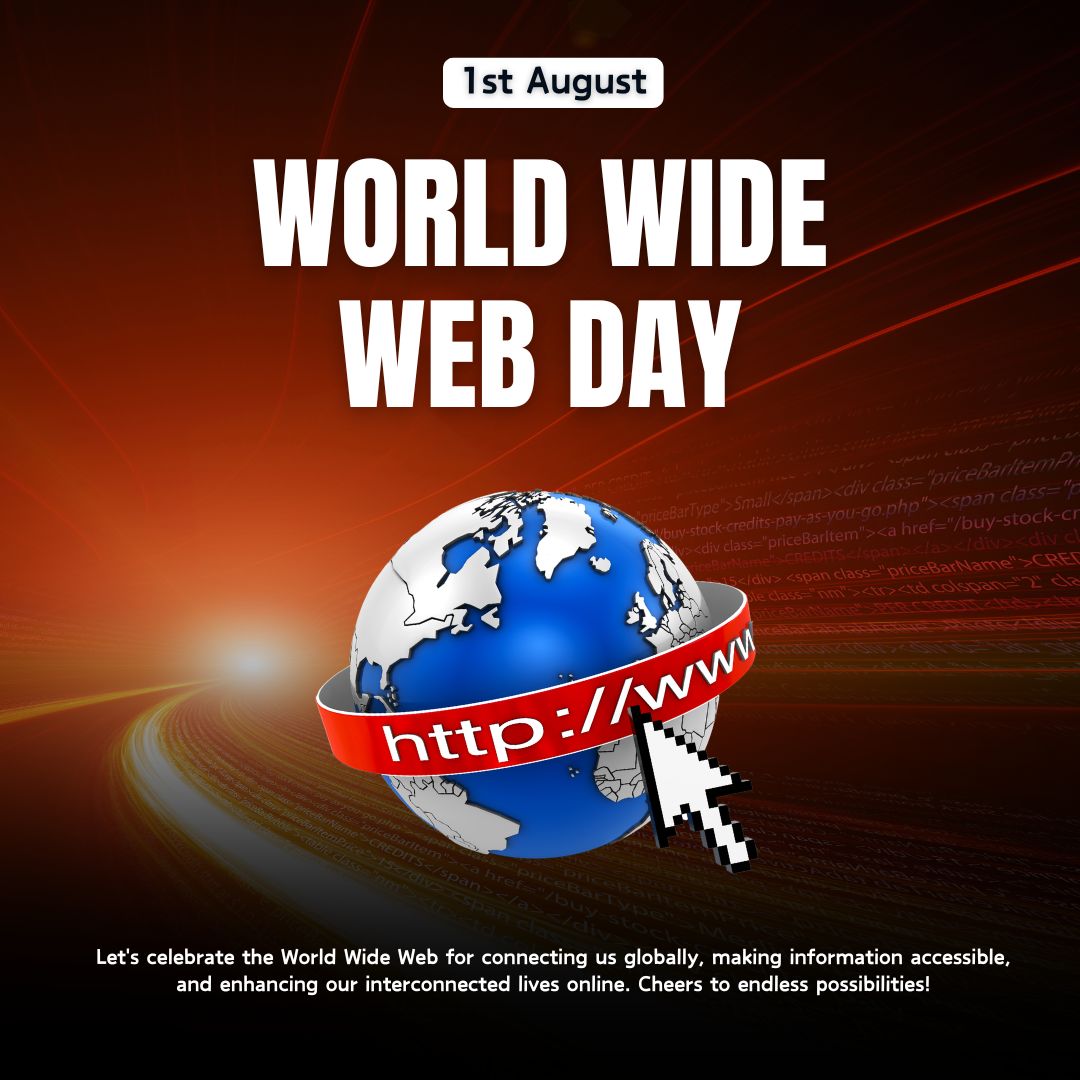
Every year on August 1, people around the world celebrate World Wide Web Day to recognize one of the most important inventions in modern history—the World Wide Web (WWW). In 2026, the day falls on Saturday, August 1.
The World Wide Web has transformed how we communicate, learn, work, shop, and access information. From online education and digital banking to social media and e-commerce, the web has become an essential part of daily life.
World Wide Web Day 2026 encourages us to appreciate this remarkable innovation, promote responsible internet use, and recognize the people who continue to build and improve the web. It also reminds us how technology connects billions of people and drives progress across the world.
World Wide Web Day 2026 Date
World Wide Web Day 2026 will be observed on Saturday, August 1, 2026.
What Is the World Wide Web?
The World Wide Web (WWW) is a system of interconnected websites and web pages that people access through the internet using a web browser.
While many people use the terms Internet and World Wide Web interchangeably, they are different. The Internet is the global network that connects devices, while the World Wide Web is a service that allows users to access websites using technologies like HTTP, HTML, and URLs.
World Wide Web 2026 Theme
The Theme for the World Wide Web 2026 is Energy-Aware Web and AI Systems for Sustainability. This focus addresses the growing environmental impact of data centers and large-model training, promoting energy-efficient algorithms and sustainable digital infrastructures.
History of the World Wide Web
The World Wide Web was invented in 1989 by British scientist Tim Berners-Lee at CERN, featuring core technologies like HTML, HTTP, and URLs.
Key Milestones
- March 1989: Tim Berners-Lee wrote his first global information-sharing proposal at CERN, which his boss labeled “Vague but exciting”.
- November 1990: A formal management proposal was created alongside Belgian engineer Robert Cailliau.
- December 1990: The first web server, browser, and editor became operational on a NeXT computer.
- August 1991: The web was introduced to the general public outside of research groups.
- April 30, 1993: CERN made the World Wide Web software freely available in the public domain, allowing it to grow globally.
Objectives of World Wide Web Day
Celebrate Innovation
Recognizes one of the greatest technological achievements in history.
Promote Digital Learning
Highlights the importance of online education and easy access to information.
Encourage Safe Internet Use
Raises awareness about cybersecurity, privacy, and responsible online behavior.
Appreciate Web Professionals
Honors developers, designers, programmers, and other professionals who keep the web running.
Inspire Future Technology
Encourages innovation in areas like artificial intelligence, cloud computing, and web development.
Strengthen Global Connectivity
Celebrates how the World Wide Web connects people, businesses, and communities across the globe.
Importance of the World Wide Web
The World Wide Web has become an essential part of modern life. It connects people, businesses, and governments, making information and services available with just a few clicks. Here are some of its biggest contributions:
Education
Students and teachers use the web for online classes, digital libraries, research, and educational resources. It has made learning more accessible than ever.
Communication
The web enables instant communication through email, messaging apps, social media, and video conferencing, helping people stay connected worldwide.
Business and E-commerce
Businesses use the web to reach customers, promote products, and sell online. It has created new opportunities for entrepreneurs and global trade.
Healthcare
Hospitals and healthcare providers use the web for telemedicine, online appointments, health information, and patient services, improving access to medical care.
Entertainment
Streaming platforms, online games, music, podcasts, and news websites provide endless entertainment and information to users around the world.
Government Services
Many governments offer online services such as tax filing, bill payments, license renewals, and public information, saving time and improving convenience.
Internet vs. World Wide Web
Although the terms are often used interchangeably, the Internet and the World Wide Web are different.
| Internet | World Wide Web |
|---|---|
| A global network of connected computers | A collection of websites and web pages |
| Provides the infrastructure for communication | Uses the Internet to deliver information |
| Supports email, file transfers, and more | Accessed through web browsers |
| Can exist without websites | Depends on the Internet to function |
Who Invented the World Wide Web?
The World Wide Web was created by British computer scientist Tim Berners-Lee in 1989 while working at CERN.
Key Creations
- HTML: Hypertext Markup Language used to write and structure web pages.
- HTTP: Hypertext Transfer Protocol allowing computers to talk to each other.
- URL: Uniform Resource Locator addressing system to find files and pages online.
- First Browser: The initial software tool to view pages.
Evolution of the World Wide Web
The World Wide Web evolved through distinct generational stages: Web 1.0 (read-only static pages), Web 2.0 (interactive and social platforms), and Web 3.0 (the semantic, data-driven web).
Key Stages of the World Wide Web
Web 1.0 (1990–2000):
- Static, read-only web pages.
- Used mainly for reading information and basic directory searching.
- Popularized by early graphical browsers like Mosaic and Netscape Navigator in 1993.
Web 2.0 (2000–2010):
- Interactive, two-way, and social media focused.
- Enabled user-generated content, blogs, wikis, and e-commerce.
- Shifted users from passive readers to active creators.
Web 3.0 (2010–2020 and beyond):
- Focused on the semantic web and machine understanding of data.
- Delivered personalized experiences using smart data processing.
- Integrated decentralized tech, AI, and cloud connectivity.

Amazing Facts About the World Wide Web
- First website: The very first web page went live on August 6, 1991. It explained how the project worked.
- Not the same as the internet: The internet is the physical network of computers. The web is the collection of pages you view using a browser.
- Billions of pages: There are over one billion active websites online today.
- First photo: Tim Berners-Lee uploaded the first photo to the web in 1992. It showed a parody pop band from CERN called Les Horribles Cernettes.
- Free for everyone: CERN made the web code free and open to all in 1993. This choice helped the web grow very fast.
- First browser: The first popular browser with a graphic interface was Mosaic. It launched in 1993 and made the web fun to use.
- First online sale: A man sold a Sting CD on a site called NetMarket on August 11, 1994. It was one of the first safe online buys.
- Google’s big start: Google launched in 1998 and changed how people find data on the web. It is now the most visited site globally.
- Most web traffic: Mobile phones now generate over half of all global web traffic.
- The Dark Web: The public web you use daily is only a small part of the total data space. A large portion requires special tools or remains hidden.
World Wide Web Day 2026 Celebration Ideas
Whether you’re a student, teacher, business owner, or tech enthusiast, here are some meaningful and fun ways to celebrate World Wide Web Day 2026 on August 1:
🌐 1. Learn Basic Web Development
Explore the fundamentals of HTML, CSS, and JavaScript by creating a simple webpage.
📚 2. Discover the History of the Web
Read about how Sir Tim Berners-Lee invented the World Wide Web and how it has evolved over the years.
💻 3. Build or Update Your Website
Create a personal website, start a blog, or improve your existing site’s speed, design, and security.
🔒 4. Promote Safe Internet Practices
Share tips on creating strong passwords, avoiding phishing scams, and protecting personal data online.
🎓 5. Host a Digital Literacy Workshop
Organize an online or offline session to teach students or community members about responsible internet use.
📱 6. Share Educational Content on Social Media
Post interesting facts, quotes, or infographics about the World Wide Web using hashtags like #WorldWideWebDay and #WWWDay.
🌍 7. Explore Educational Websites
Spend time learning something new through online courses, digital libraries, or educational platforms.
Benefits of the World Wide Web
The World Wide Web has transformed everyday life in many ways. Some of its key benefits include:
Easy Access to Information
The web provides instant access to news, research, educational materials, and countless online resources.
Better Communication
People can connect through emails, messaging apps, video calls, and social media from anywhere in the world.
Online Learning
Students can attend virtual classes, access digital libraries, and develop new skills through online courses.
Business Growth
Companies use websites and digital marketing to reach customers, expand globally, and increase sales.
Convenient Online Services
The web makes online shopping, banking, ticket booking, and bill payments fast and convenient.
Remote Work Opportunities
Professionals can collaborate, attend meetings, and work efficiently from any location.
Challenges of the Modern Web
Despite its many advantages, the World Wide Web also presents several challenges.
Cybersecurity Threats
Hackers, malware, and ransomware continue to pose risks to individuals and businesses.
Fake News
False or misleading information can spread quickly, making it important to verify reliable sources.
Privacy Concerns
Many websites collect user data, making online privacy an important issue.
Online Scams
Phishing emails and fraudulent websites attempt to steal personal and financial information.
Digital Divide
Not everyone has equal access to reliable internet and digital technologies.
Inspiring World Wide Web Day 2026 Quotes
“The Web is more a social creation than a technical one.” — Sir Tim Berners-Lee
“The power of the Web is in its universality. Access by everyone regardless of disability is an essential aspect.” — Sir Tim Berners-Lee
“The Internet is becoming the town square for the global village of tomorrow.” — Bill Gates
“Technology is best when it brings people together.” — Matt Mullenweg
“The Web has transformed the way we learn, communicate, and innovate, making knowledge accessible to billions.” — Anonymous
“Every click on the web is a step toward discovering new ideas, opportunities, and connections.” — Anonymous
Tips for Safe Web Browsing
Follow these simple practices to stay safe online:
- Use strong, unique passwords.
- Enable two-factor authentication whenever possible.
- Visit secure websites that use HTTPS.
- Avoid clicking suspicious links or attachments.
- Keep your browser and software updated.
- Install trusted antivirus software.
- Never share sensitive personal information on unknown websites.
- Back up important files regularly.
- Verify information before sharing it online.
Frequently Asked Questions (FAQs)
1. When is World Wide Web Day 2026?
World Wide Web Day 2026 will be celebrated on Saturday, August 1, 2026.
2. Why is World Wide Web Day celebrated?
It celebrates the invention of the World Wide Web and recognizes its impact on communication, education, business, and everyday life.
3. Who invented the World Wide Web?
The World Wide Web was invented by Sir Tim Berners-Lee in 1989.
4. What is the difference between the Internet and the World Wide Web?
The Internet is the global network connecting computers, while the World Wide Web is a system of websites and web pages that operates on the Internet.
5. How can I celebrate World Wide Web Day?
You can learn about web technology, improve your digital skills, promote safe internet use, or share educational content about the web.
6. Why is the World Wide Web important?
It provides easy access to information, supports communication, powers businesses, enables online learning, and connects people worldwide.
7. Is World Wide Web Day a public holiday?
No, it is an international awareness day and is not an official public holiday.
Conclusion
World Wide Web Day 2026 is a celebration of one of the most influential inventions in human history. Since its creation, the World Wide Web has transformed the way people communicate, learn, work, and share information across the globe.
As technology continues to evolve, the web remains at the heart of innovation, connecting billions of people and creating endless opportunities. Observing this day reminds us to use the web responsibly, support digital inclusion, and appreciate the visionaries whose ideas shaped today’s connected world.