


Introduction
Every year on 9 August, the world observes Nagasaki Day to remember the victims of the atomic bombing of Nagasaki during World War II. Nagasaki Day 2026 falls on Sunday, 9 August, offering a time to honor those who lost their lives and reflect on the importance of peace.
Also Read: Hiroshima Day 2026: Date, Theme, History, Importance, Interesting Facts & Peaceful Quotes
The bombing occurred just three days after the attack on Hiroshima, causing widespread destruction and long-lasting suffering. Today, Nagasaki is recognized worldwide as a symbol of resilience, hope, and the need to prevent nuclear warfare.
In this article, you’ll explore the history of Nagasaki Day, its significance, key facts, and the lessons it offers for building a more peaceful future.
What Is Nagasaki Day?
Nagasaki Day is observed every year on 9 August to commemorate the victims of the atomic bombing of Nagasaki in 1945. The day honors those who died, supports survivors, and raises awareness about the devastating impact of nuclear weapons.
It also encourages peace education and reminds future generations to learn from history. Through memorial events and educational activities, Nagasaki Day inspires people to promote understanding, compassion, and a world free from nuclear conflict.
When Is Nagasaki Day 2026?
| Event | Details |
|---|---|
| Date | 9 August 2026 |
| Day | Sunday |
| Observed In | Japan and worldwide |
| Purpose | To remember the victims and promote peace |
Nagasaki Day 2026 Theme
The theme for Nagasaki Day 2026 is “Timeless Testimonies from A-bomb Survivor Trees”, focusing on the resilient Hibaku Jumoku trees that survived the 1945 atomic blast.
About Nagasaki Day 2026
- Date: Observed annually on August 9, marking the 81st anniversary of the 1945 atomic bombing.
- Core Focus: Global peace, nuclear disarmament, and honoring the victims and survivors.
History of Nagasaki Day
Nagasaki Day is observed annually to remember the atomic bombing of Nagasaki, Japan, by the United States on August 9, 1945. The 21-kiloton plutonium bomb, named “Fat Man,” killed tens of thousands of people instantly and led to an estimated 74,000 deaths by the end of 1945.
Historical Context
- On 6 August 1945, the United States dropped the first atomic bomb, “Little Boy,” on Hiroshima.
- The Mission: A U.S. B-29 bomber named Bockscar targeted Kokura initially, but heavy smoke and clouds forced a diversion to the secondary target, Nagasaki.
- The Detonation: The bomb exploded at 11:02 a.m. at an altitude of 1,650 feet above the city.
- The Aftermath: Though surrounding hills and valleys contained some of the blast energy, roughly half of the city was destroyed.
- End of the War: Coming three days after the bombing of Hiroshima on August 6, 1945, the attack precipitated Japan’s announcement of surrender on August 10 and formal surrender on August 14–15.
Quick Timeline
- 1939 – World War II begins.
- 6 August 1945 – Hiroshima is bombed.
- 9 August 1945 – Nagasaki is hit by the “Fat Man” atomic bomb.
- 15 August 1945 – Japan announces its surrender.
- Every 9 August – Nagasaki Day is observed to remember the victims and promote peace.
Why Is Nagasaki Day Important?
Nagasaki Day is observed to remember the victims of the atomic bombing and to encourage a future built on peace rather than conflict. The day reminds the world of the devastating impact of nuclear weapons and the importance of preventing similar tragedies.
Its significance includes:
- Honoring the lives lost in the 1945 bombing.
- Supporting survivors and preserving their stories.
- Promoting peace, tolerance, and mutual respect.
- Raising awareness about nuclear disarmament.
- Encouraging younger generations to learn from history.
How Is Nagasaki Day Observed?
Every year, Nagasaki Day is marked with memorial events that honor the victims and spread the message of peace.
Common observances include:
- Peace ceremonies at memorial sites.
- A moment of silence at the time of the bombing.
- Floral tributes and wreath-laying.
- Speeches by leaders and survivors.
- Peace prayers and candlelight vigils.
- Educational programs in schools and colleges.
- Exhibitions, documentaries, and discussions on nuclear disarmament.
Nagasaki Peace Park
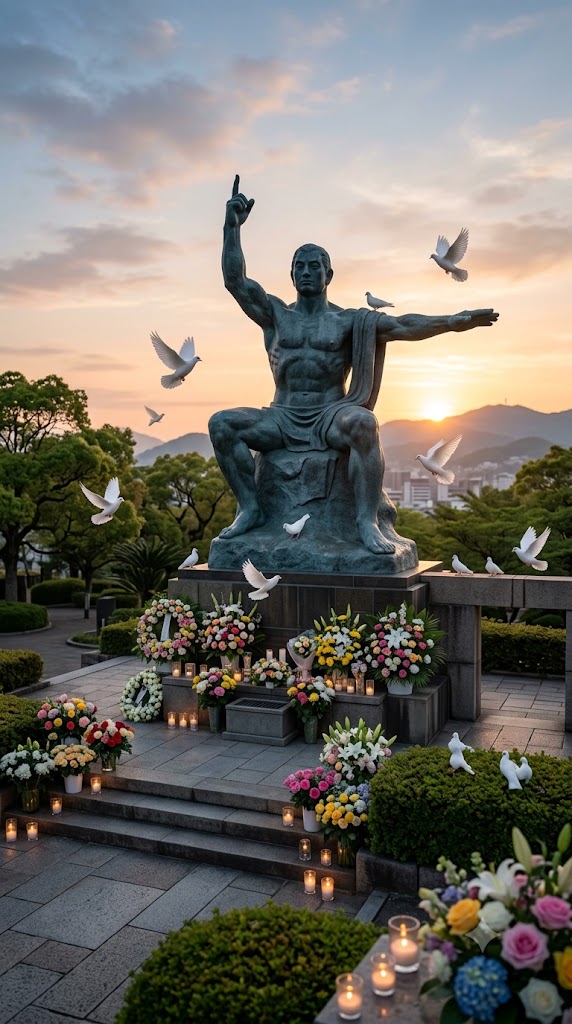
Located near the bomb’s hypocenter, Nagasaki Peace Park is one of the city’s most important memorials. It honors those who lost their lives and serves as a symbol of hope and international friendship.
The park features the iconic Peace Statue, memorial monuments, fountains, and trees donated by countries worldwide. Every year, thousands of visitors gather here to pay their respects and participate in peace ceremonies.
Nagasaki Atomic Bomb Museum
The Nagasaki Atomic Bomb Museum preserves the history of the bombing through photographs, personal belongings, survivor testimonies, and historical records.
The museum helps visitors understand the human cost of nuclear warfare while promoting education, peace, and global efforts to eliminate nuclear weapons.
Impact of the Bombing
On August 9, 1945, the United States dropped a 21-kiloton plutonium bomb named “Fat Man” on Nagasaki, Japan. The blast killed an estimated 74,000 people by the end of 1945, destroyed over two square miles of the city, and led to long-term health and psychological struggles for survivors.
Immediate Destruction
- Explosion Power: The bomb detonated at an altitude of 1,650 feet, producing a yield more powerful than the Hiroshima bomb.
- Annihilation: Everything within a one-mile radius of ground zero was completely destroyed.
- Extreme Heat and Fires: Ground temperatures reached 4,000°C, sparking massive fires that consumed over 22% of the city’s buildings.
- Radioactive Rain: A heavy downpour of black rain fell after the blast, spreading radioactive material.
Casualties and Health Impacts
- Death Toll: Around 60,000 to 80,000 people died within the first few months, with roughly half of those deaths occurring on the first day.
- Radiation and Burns: Survivors suffered from severe thermal burns, acute radiation sickness, and trauma.
- Long-Term Illnesses: Later years brought increased rates of leukemia and lifelong forms of cancer.
Social and Psychological Effects
- Mental Distress: Survivors faced long-term anxiety, depression, and post-traumatic stress from witnessing severe injuries and loss.
- Social Stigma: Survivors, known as hibakusha, faced discrimination, social isolation, and difficulties finding marriage partners due to unfounded fears about radiation.
Lessons the World Learned
Nagasaki Day reminds us that peace must always be valued over conflict. The tragedy continues to inspire global efforts to reduce nuclear weapons and strengthen international cooperation.
Key lessons include:
- Peace is more powerful than war.
- Diplomacy can prevent future conflicts.
- Nuclear weapons have devastating humanitarian consequences.
- History should be remembered to avoid repeating past mistakes.
- Compassion and unity help build a safer world.
10 Interesting Facts About Nagasaki Day
- Date of Observance: “Nagasaki Day is observed annually on August 9th”.
- The Second Attack: It occurred just three days after the atomic bombing of Hiroshima on August 6, 1945.
- The Bomb’s Codename: “The second atomic bomb dropped on Nagasaki was code-named the ‘Fat Man’.”
- Plutonium Design: Unlike Hiroshima’s uranium-235 bomb, Fat Man was a more complex implosion-type plutonium-239 weapon.
- The Aircraft: The B-29 bomber that dropped the weapon was named Bockscar.
- Original Target: Nagasaki was not the primary target; Kokura was chosen first, but heavy clouds forced the pilot to divert.
- Casualty Numbers: An estimated 40,000 people died instantly, with the death toll rising to roughly 70,000–80,000 by the end of 1945.
- Long-term Radiation: “Survivors in the city still experience diseases like leukemia, thyroid, breast, and lung cancers at a higher frequency.”
- Historical Outcome: The devastation directly contributed to “Japan’s unconditional surrender in Second World War.”
- Global Message: The day is dedicated to promoting world peace and advocating for the total elimination and non-proliferation of nuclear weapons.
Nagasaki Day 2026 Peace Quotes
“Peace is not merely the absence of war but the presence of justice and humanity.”
“The greatest tribute to the victims of war is our commitment to lasting peace.”
“History teaches us that peace begins with understanding.”
“Let the memories of Nagasaki inspire a future without nuclear weapons.”
“A peaceful world is built through compassion, dialogue, and respect.”
How Students Can Observe Nagasaki Day 2026
Students can honor Nagasaki Day through meaningful activities that promote learning and peace:
- Write essays or speeches on world peace.
- Participate in poster or drawing competitions.
- Read about the history of Hiroshima and Nagasaki.
- Watch educational documentaries.
- Join school discussions on peace and nuclear disarmament.
- Observe a moment of silence for the victims.
- Spread messages of kindness, unity, and non-violence.
These simple activities help young people understand history and inspire them to become responsible global citizens.
Frequently Asked Questions (FAQs)
1. When is Nagasaki Day 2026?
Nagasaki Day 2026 will be observed on Sunday, 9 August 2026.
2. Why is Nagasaki Day observed?
It is observed to remember the victims of the atomic bombing of Nagasaki in 1945 and to promote peace and nuclear disarmament.
3. What happened on 9 August 1945?
On 9 August 1945, the United States dropped the “Fat Man” atomic bomb on Nagasaki during World War II, causing widespread destruction and loss of life.
4. What is the purpose of Nagasaki Peace Park?
Nagasaki Peace Park honors the victims of the bombing and serves as a symbol of world peace, hope, and the elimination of nuclear weapons.
5. What is the Nagasaki Atomic Bomb Museum?
It is a museum that preserves the history of the bombing through photographs, artifacts, and survivor testimonies while educating visitors about the importance of peace.
6. What is the theme of Nagasaki Day 2026?
The theme for Nagasaki Day 2026 is “Timeless Testimonies from A-bomb Survivor Trees”, focusing on the resilient Hibaku Jumoku trees that survived the 1945 atomic blast.
7. How can students observe Nagasaki Day?
Students can observe the day by participating in peace activities, writing essays, attending educational programs, reading historical accounts, and spreading messages of unity and compassion.
Conclusion
Nagasaki Day 2026 is a solemn reminder of one of history’s most devastating events and the importance of preserving peace. By remembering the victims of the atomic bombing, we honor their lives and reaffirm our commitment to a future free from nuclear conflict.
The resilience shown by the people of Nagasaki demonstrates that hope can emerge even after immense tragedy. Their journey of rebuilding continues to inspire the world to choose dialogue over violence and cooperation over conflict.
As we observe Nagasaki Day on 9 August 2026, let us remember the lessons of history, support global peace efforts, and work together to create a safer, more compassionate world for future generations.