


Introduction
National Mourning Day (Bangladesh) 2026 is observed on 15 August to remember Bangabandhu Sheikh Mujibur Rahman, the Father of the Nation of Bangladesh, and most of his family members who were killed during the events of 15 August 1975. It is a day of remembrance, reflection, and respect for the country’s history.
Across Bangladesh, government offices, schools, organizations, and citizens pay tribute through prayers, memorial ceremonies, discussions, and cultural programs. The day also encourages younger generations to understand Bangladesh’s history and the importance of national unity.
In this article, you’ll learn about the history, significance, observances, and key facts about National Mourning Day (Bangladesh).
National Mourning Day (Bangladesh) 2026
In 2026, National Mourning Day will be observed on Saturday, 15 August. As in previous years, memorial ceremonies, educational programs, and prayer services are expected to take place across Bangladesh. Government offices, educational institutions, and Bangladeshi communities abroad are also likely to organize tribute events to honor the occasion.
Why is National Mourning Day (Bangladesh) Observed?
National Mourning Day is observed to:
- Honor Bangabandhu Sheikh Mujibur Rahman.
- Remember those who lost their lives on 15 August 1975.
- Preserve Bangladesh’s national history.
- Promote unity and democratic values.
- Educate younger generations about the country’s past.
The day encourages people to remember history with respect and reflect on the importance of peace, unity, and national progress.
History of National Mourning Day (Bangladesh)
National Mourning Day in Bangladesh marks assassination of the country’s first president and Father of the Nation, Sheikh Mujibur Rahman, and most of his family. First observed by students in 1976 and made an official public holiday in 1996, the national holiday status was canceled by the interim government in October 2024.
Origins and First Observance
- The Assassination: On August 15, 1975, military officers killed Sheikh Mujibur Rahman (Bangabandhu), his wife, and 16 others at their Dhanmondi home in Dhaka.
- Initial Memorial: Students declared a day of mourning on November 5, 1975.
- First Commemoration: Despite military decrees, student leaders organized a prayer gathering on the first death anniversary, August 15, 1976.
Official Recognition and Cancellation
- Official Holiday: The Awami League government formally established August 15 as National Mourning Day and a national public holiday.
- Legal Actions: The government initiated trials for the self-confessed killers in 1996, executing five in January 2010.
- Recent Changes: The interim government led by Muhammad Yunus canceled August 15 as an official national holiday in late 2024 as part of a broader removal of state-mandated days tied to the Mujib legacy.
Who Was Sheikh Mujibur Rahman?
Sheikh Mujibur Rahman, popularly known as Bangabandhu (“Friend of Bengal”), is recognized as the Father of the Nation of Bangladesh. He played a central role in the country’s struggle for independence and inspired millions through his leadership and vision.
His contributions to the Bengali nationalist movement and the creation of Bangladesh in 1971 remain an important part of the nation’s history. Today, he is remembered for his dedication to the people of Bangladesh and his efforts to build an independent and sovereign nation.
Significance of National Mourning Day (Bangladesh)
National Mourning Day is more than a day of remembrance. It reflects Bangladesh’s respect for its history and the people who helped shape the nation. The observance encourages citizens to remember the past while promoting unity, peace, and democratic values.
The day is significant because it:
- Honors the memory of Bangabandhu Sheikh Mujibur Rahman.
- Remembers the victims of 15 August 1975.
- Preserves an important chapter of Bangladesh’s history.
- Inspires younger generations to learn about the nation’s past.
- Encourages national unity and respect for democratic ideals.
How National Mourning Day Is Observed
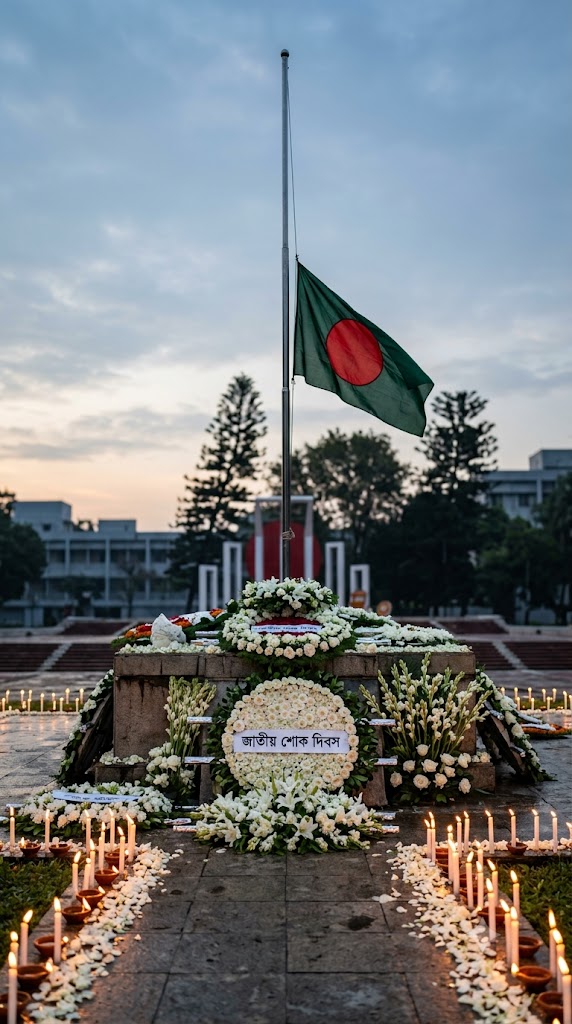
People across Bangladesh observe National Mourning Day with dignity and respect. Government institutions, educational organizations, and citizens participate in various remembrance activities.
Common observances include:
- The national flag is flown at half-mast.
- Floral tributes are offered at memorial sites.
- Special prayers are held in mosques and other places of worship.
- Discussion programs and seminars highlight Bangladesh’s history.
- Schools and universities organize educational events.
- Television and radio broadcast special documentaries and tribute programs.
- Cultural organizations hold commemorative events featuring patriotic songs and speeches.
Important Places Associated with National Mourning Day
Several locations hold special importance during National Mourning Day observances. These places become the focus of tribute ceremonies and remembrance programs each year.
- Bangabandhu Memorial Museum, Dhaka – The former residence of Sheikh Mujibur Rahman and a major memorial site.
- Government offices – Hold official ceremonies and commemorative events.
- Educational institutions – Organize discussions, essay competitions, and cultural programs.
- Memorial venues across Bangladesh – Citizens gather to offer floral tributes and prayers.

Fastrack Jupitor R2 Smart Watch, 1.38” TFT Display, 240 * 240 Pixel Resolution, SingleSync BT Calling, AI Voice Assistant, 100+ Sports Modes & Smartwatch Faces, Upto 5 Day Battery, IP68 (Black)
800+ bought in past month
10 Interesting Facts About National Mourning Day (Bangladesh)
- Date of Tragedy: August 15, 1975, marks the day Bangladesh’s first president, Sheikh Mujibur Rahman (Bangabandhu), was killed.
- Family Loss: Most of his family members died in the attack.
- Survivors: Two daughters, Sheikh Hasina and Sheikh Rehana, survived because they were in Germany.
- First Declared: Sheikh Hasina’s government first declared August 15 as National Mourning Day in 1996.
- Political Shifts: The BNP-led government scrapped the holiday in 2001.
- Restored by Court: A 2008 High Court order brought back the official observance.
- Standard Rituals: People traditionally hoisted the national flag at half-mast and flew black flags.
- Black Badges: Citizens and officials often wore black badges to show grief.
- Official Cancellation: The interim government led by Muhammad Yunus canceled the August 15 holiday in October 2024.
- Legacy Change: The cancellation was part of removing eight national holidays tied directly to the political legacy of Sheikh Mujibur Rahman.
Timeline of Key Events
| Year | Event |
|---|---|
| 1971 | Bangladesh gains independence. |
| 1972 | The Constitution of Bangladesh comes into effect. |
| 15 August 1975 | Sheikh Mujibur Rahman and most of his family members are killed during a military coup. |
| Following years | National Mourning Day becomes an annual observance. |
Why This Day Matters to Young Generations
National Mourning Day (Bangladesh) helps young people understand Bangladesh’s history and the importance of preserving national unity. Learning about the country’s past encourages responsible citizenship, respect for democratic values, and appreciation for the sacrifices that shaped modern Bangladesh. Remembering history also helps inspire future generations to work toward peace, progress, and national development.
Ways to Observe National Mourning Day (Bangladesh) 2026 Respectfully
People can observe National Mourning Day with respect by taking part in meaningful activities that honor the occasion.
- Attend remembrance ceremonies and memorial events.
- Offer floral tributes at memorial sites.
- Observe a moment of silence.
- Read about the history of Bangladesh and its independence.
- Participate in educational discussions or seminars.
- Watch documentaries or historical programs.
- Share accurate historical information respectfully.
- Encourage young people to learn about the nation’s history.
Frequently Asked Questions (FAQs)
1. When is National Mourning Day observed in Bangladesh?
National Mourning Day is observed every year on 15 August.
2. Why is National Mourning Day important?
It honors Bangabandhu Sheikh Mujibur Rahman and remembers the tragic events of 15 August 1975, while encouraging respect for Bangladesh’s history.
3. Who was Sheikh Mujibur Rahman?
Sheikh Mujibur Rahman, known as Bangabandhu, is recognized as the Father of the Nation of Bangladesh for his leadership during the country’s struggle for independence.
4. How is National Mourning Day observed?
The day is observed with prayers, floral tributes, discussion programs, cultural events, educational activities, and the national flag flown at half-mast.
5. Is National Mourning Day observed outside Bangladesh?
Yes. Bangladeshi embassies, high commissions, and expatriate communities around the world organize remembrance programs.
6. Why should young people learn about this day?
Learning about National Mourning Day helps young generations understand Bangladesh’s history, appreciate national unity, and value democratic principles.
7. What is the purpose of National Mourning Day?
The purpose is to honor those remembered on 15 August 1975, preserve an important chapter of Bangladesh’s history, and inspire future generations to learn from the past.
Conclusion
National Mourning Day (Bangladesh) is a solemn occasion that honors Bangabandhu Sheikh Mujibur Rahman and commemorates the tragic events of 15 August 1975. Beyond remembrance, the day encourages people to reflect on Bangladesh’s history, appreciate the nation’s journey, and uphold the values of unity, peace, and democracy.
Each year, memorial ceremonies, prayers, educational programs, and cultural events bring people together to pay tribute with dignity and respect. By remembering the past and sharing its lessons with future generations, National Mourning Day continues to play an important role in preserving the history and identity of Bangladesh.
Fastrack Jupitor R2 Smart Watch, 1.38” TFT Display, 240 * 240 Pixel Resolution, SingleSync BT Calling, AI Voice Assistant, 100+ Sports Modes & Smartwatch Faces, Upto 5 Day Battery, IP68 (Black)
800+ bought in past month