


Introduction
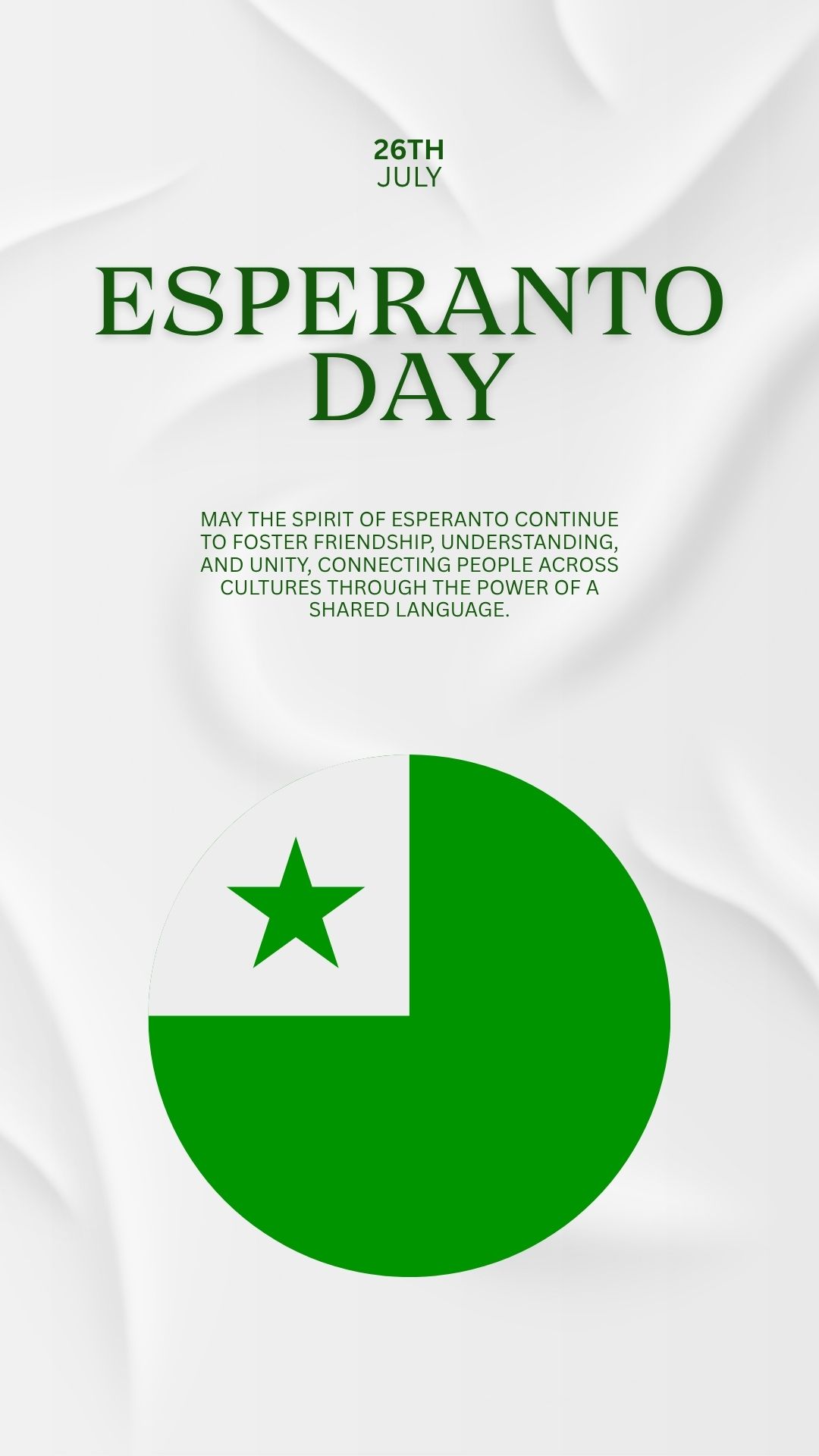
Esperanto Day 2026 is a special occasion that celebrates Esperanto, the world’s most widely spoken constructed international language. Observed every year on July 26, the day honors the vision of bringing people from different cultures together through a simple and neutral language. In 2026, Esperanto Day falls on Sunday, July 26.
Also Read: World Mangrove Day 2026: Theme, History, Importance, Facts & Conservation
Although English is widely used for international communication today, Esperanto continues to inspire millions of learners and language enthusiasts around the globe. It represents more than just a language—it symbolizes peace, equality, friendship, and cross-cultural understanding.
Whether you’re hearing about Esperanto for the first time or are already interested in languages, this guide covers everything you need to know about Esperanto Day 2026, including its history, significance, celebrations, interesting facts, and ways to participate.
Esperanto Day 2026 Date
- Date: Sunday, July 26, 2026
- Day: Sunday
- Observed: Worldwide
- Purpose: To celebrate the Esperanto language and promote international understanding through communication.
What Is Esperanto Day?
Esperanto Day is a global observance held annually on July 26 that celebrates the publication of Unua Libro, the first-ever textbook introducing the constructed international language Esperanto.
What Is Esperanto?
Esperanto is the world’s most widely spoken constructed auxiliary language, created to serve as an easy-to-learn, universal second language to foster world peace and international communication. It was published in 1887 by Polish eye doctor L. L. Zamenhof under the pseudonym Dr. Esperanto (meaning “Doctor Hopeful”).
Key Features
- Simple Grammar: Regular rules with no irregular verbs or grammatical gender for nouns.
- Phonetic Spelling: Each letter makes only one sound, and words are spelled exactly as they sound.
- European Roots: Vocabulary is drawn largely from Latin, Romance, Germanic, and Slavic languages.
History of Esperanto Day
Esperanto Day is celebrated worldwide to mark the publication of the first Esperanto textbook, Unua Libro, in 1887. The day honors language creator L. L. Zamenhof and promotes global linguistic justice, international cooperation, and peace.
Origins and Significance
- The First Book: Polish ophthalmologist L. L. Zamenhof published Unua Libro under the pseudonym Dr. Esperanto on July 26, 1887.
- Core Purpose: The constructed language was designed to bridge cultural divides and serve as a neutral, easy-to-learn universal second language.
- Global Observance: The Universal Esperanto Association champions the date as a symbol of fair communication and human brotherhood across ethnic boundaries.
Who Created Esperanto?
Esperanto was created by L. L. Zamenhof, a Polish eye doctor and language expert. He published the first book about this new language in 1887.
Why He Made It
- To stop fights: He grew up in a town where people spoke different languages and often argued.
- To bring peace: He wanted a shared second language so people from all over the world could talk easily and be friends.
Facts About the Creator
- Name: Ludwik Lejzer Zamenhof (born December 15, 1859, died April 14, 1917).
- Pen name: He used the fake name Doktoro Esperanto (which means “Doctor Hopeful”) when he first shared his book. People later started calling the language Esperanto.
Why Is Esperanto Day Celebrated?
Esperanto Day celebrates both the language and the ideals behind it.
Its main objectives include:
- Promoting international friendship
- Encouraging peaceful communication
- Supporting cultural exchange
- Respecting linguistic diversity
- Inspiring people to learn new languages
- Building global understanding
- Connecting people across borders
The celebration reminds us that communication is one of the strongest tools for creating a more peaceful world.
Esperanto Day 2026 Theme
The theme for the 2026 global Esperanto gathering is “Volontulado en la servo al daŭripova evoluigo” (Volunteering in the service of sustainable development). This core focus guides the 111th World Congress of Esperanto taking place from August 1 to August 8, 2026, in Graz, Austria.
Congress and Theme Details
- Dates: August 1–8, 2026
- Location: Graz, Austria
- Core Focus: How voluntary work supports both the Esperanto movement and broader global sustainable development goals.
Why Esperanto Still Matters Today
More than a century after its creation, Esperanto continues to have relevance.
International Communication
Esperanto allows people from different countries to communicate without giving preference to any one national language.
Cultural Exchange
The language connects people from various backgrounds through literature, music, travel, and international events.
Education
Many educators believe that learning Esperanto first can make it easier to learn additional foreign languages because of its logical grammar.
Online Communities
Thousands of learners participate in online forums, language exchanges, and virtual meetings where Esperanto is actively spoken.
Global Friendships
Esperanto has helped people build friendships that cross cultural and geographic boundaries.
How Esperanto Day Is Celebrated Around the World
Esperanto Day is observed in many creative ways.
Popular celebrations include:
- Language workshops
- Online webinars
- International conferences
- Book exhibitions
- Poetry readings
- Music performances
- Cultural festivals
- Social media campaigns
- Educational seminars
- Community meetups
Many Esperanto organizations also organize virtual events so people from different countries can participate together.
How You Can Celebrate Esperanto Day 2026
Anyone can take part in Esperanto Day, even without prior knowledge of the language.
Here are some ideas:
Learn Basic Esperanto
Start with simple greetings and everyday expressions.
Read About Zamenhof
Explore the life and vision of Esperanto’s creator.
Join an Online Community
Participate in discussion groups or language exchange sessions.
Attend a Virtual Event
Many organizations host free online celebrations and workshops.
Share on Social Media
Spread awareness using educational posts about Esperanto Day.
Read Esperanto Literature
Discover books, poems, and translations written in Esperanto.
Encourage Language Learning
Introduce friends or students to the concept of international languages.
Interesting Facts About Esperanto
- Created by a Doctor: Invented by Polish ophthalmologist L. L. Zamenhof.
- “Doctor Hopeful”: Zamenhof published his first book under the pen name Doktoro Esperanto, which means “one who hopes”.
- Bialystok Roots: Inspired by growing up in a multi-ethnic city where language barriers caused constant social conflict.
- Zero Irregular Verbs: Grammar has no exceptions, irregular verbs, or gendered verb endings.
- Phonetic Spelling: Every letter makes only one sound, and words are spelled exactly how they sound.
- Flexible Word Building: Uses a system of prefixes and suffixes to create new words from existing roots, shrinking the vocabulary needed.
- Native Speakers: An estimated 2,000 people are raised speaking it natively by parents from different linguistic backgrounds.
- Thriving Media: Features active translation of classic literature, original music, internet radio like Muzaiko, and Wikipedia editions.
- A Global Host Network: Features Pasporta Servo, a worldwide hospitality network allowing travelers to stay with other speakers.
- Learning Stepping Stone: Studies show learning Esperanto first can help students master other foreign languages faster.
Basic Esperanto Words and Phrases
Here are a few beginner-friendly expressions:
| English | Esperanto |
|---|---|
| Hello | Saluton |
| Good morning | Bonan matenon |
| Thank you | Dankon |
| Please | Bonvolu |
| Yes | Jes |
| No | Ne |
| Goodbye | Ĝis revido |
| Friend | Amiko |
| Peace | Paco |
| Love | Amo |
Learning just a few words is a great way to appreciate the language and its global community.
Benefits of Learning Esperanto
Learning Esperanto offers several advantages.
- Easier than many foreign languages
- Improves understanding of grammar
- Builds confidence in language learning
- Encourages international friendships
- Supports cultural awareness
- Enhances communication skills
- Opens opportunities to join global communities
Many people also find that studying Esperanto motivates them to explore other languages.
Inspirational Quotes About Language
“Language is the road map of a culture.” — Rita Mae Brown
“To have another language is to possess a second soul.” — Charlemagne
“Words travel farther than borders.”
These quotes remind us that languages connect people in meaningful ways.
Frequently Asked Questions (FAQs)
1. When is Esperanto Day 2026?
Esperanto Day 2026 will be observed on Sunday, July 26, 2026.
2. Why is Esperanto Day celebrated?
It celebrates the Esperanto language and promotes international friendship, equality, and peaceful communication.
3. Who invented Esperanto?
Esperanto was created by Dr. L. L. Zamenhof in 1887.
4. Is Esperanto still spoken today?
Yes. It continues to be learned and spoken by communities around the world.
5. Is Esperanto difficult to learn?
No. Its regular grammar and phonetic spelling make it one of the easiest languages to learn.
6. What is the purpose of Esperanto?
Its purpose is to provide a neutral international language that helps people communicate across cultures.
7. Is there an official Esperanto Day 2026 theme?
The theme for Esperanto Day 2026 is “Volontulado en la servo al daŭripova evoluigo” (Volunteering in the service of sustainable development).
8. How can I celebrate Esperanto Day?
You can learn basic phrases, attend online events, read about Esperanto, or share awareness on social media.
Conclusion
Esperanto Day 2026 is a reminder that communication can unite people across cultures, countries, and backgrounds. Created with the hope of fostering peace and understanding, Esperanto continues to inspire learners and language enthusiasts more than a century after its introduction.
Whether you choose to learn a few Esperanto phrases, explore its fascinating history, or participate in a local or online event, celebrating Esperanto Day is a meaningful way to appreciate linguistic diversity and global friendship. In an increasingly connected world, the ideals behind Esperanto remain as relevant as ever, encouraging us to build bridges through communication and mutual respect.