


Introduction
Hiroshima Day 2026 will be observed on Thursday, August 6, 2026, marking 81 years since the atomic bombing of Hiroshima during World War II. The day honors the memory of those who lost their lives and serves as a powerful reminder of the human cost of war. It also reinforces the global message of peace, compassion, and the importance of preventing nuclear conflict.
Every year, people across the world observe Hiroshima Day through memorial ceremonies, educational programs, peace prayers, and moments of silence. The occasion encourages individuals and nations to reflect on history and work together toward a safer and more peaceful future.
What is Hiroshima Day?
Hiroshima Day is observed every year on August 6 to remember the victims of the atomic bombing of Hiroshima, Japan, in 1945. Beyond commemorating a historic event, the day promotes peace, nuclear disarmament, and respect for human life.
Hiroshima Day reminds the world that learning from history is essential to building a future based on understanding, dialogue, and cooperation.
Hiroshima Day 2026 Date
| Event | Details |
|---|---|
| Observance | Hiroshima Day 2026 |
| Date | Thursday, August 6, 2026 |
| Purpose | To honor the victims and promote world peace |
| Observed In | Japan and many countries worldwide |
| Main Activities | Memorial ceremonies, peace prayers, educational events, and moments of silence |
Hiroshima Day 2026 Theme
There is no official single worldwide theme issued by the United Nations or the city of Hiroshima for Hiroshima Day 2026. Instead, annual global observances and associated peace events on August 6 focus broadly on remembrance, nuclear disarmament, and global peace.
Core Focus Areas for 2026
- Remembrance and Resilience: Honoring the 81st anniversary of the 1945 atomic bombing, remembering the victims, and recognizing the enduring resilience of the Hibakusha (survivors).
- Nuclear Disarmament: Advocating against nuclear warfare and promoting the implementation of international treaties like the Treaty on the Prohibition of Nuclear Weapons (TPNW).
- Peaceful Conflict Resolution: Highlighting international cooperation and non-violence amidst ongoing geopolitical tensions.
History of Hiroshima Day
Hiroshima Day is observed annually to remember the atomic bombing of Hiroshima, promote global peace, and advocate for nuclear disarmament.
The 1945 Bombing
- The Date and Time: On August 6, 1945, at 8:15 a.m. local time, an American B-29 bomber named the Enola Gay dropped an atomic bomb named “Little Boy” on the city of Hiroshima.
- The Impact: The blast killed an estimated 70,000 to 80,000 people instantly, with total deaths rising to over 140,000 by the end of 1945 due to injuries and radiation sickness.
- Historical Context: It was the first time a nuclear weapon was used in warfare, preceding a second bombing on Nagasaki on August 9, 1945, which led to Japan’s surrender and the end of World War II.
Why is Hiroshima Day Important?
Hiroshima Day carries a message that goes far beyond remembering a historical event. It reminds the world of the devastating consequences of war and highlights the importance of protecting human life.
Some of the key reasons why Hiroshima Day remains significant include:
- Honors the memory of those who lost their lives.
- Supports survivors and their stories.
- Promotes peace and non-violence.
- Raises awareness about the humanitarian impact of nuclear weapons.
- Encourages international cooperation and dialogue.
- Inspires future generations to learn from history.
- Strengthens global efforts toward a world without nuclear weapons.
How Hiroshima Day is Observed Around the World
Hiroshima Day is observed with respect and reflection in many parts of the world. Governments, schools, peace organizations, and local communities organize events to honor the victims and spread the message of peace.
Common ways Hiroshima Day is observed include:
- Memorial ceremonies to honor the victims
- One-minute moments of silence
- Peace prayers and interfaith gatherings
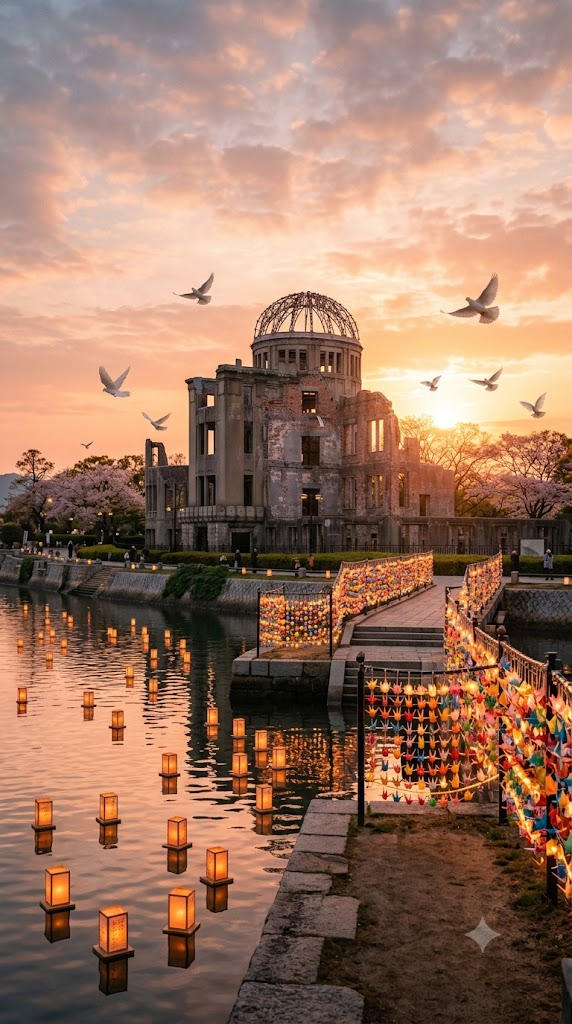
- Candlelight vigils and lantern-floating ceremonies
- Educational seminars and public discussions
- Museum exhibitions and documentary screenings
- School activities, essay competitions, and art programs
- Peace marches and community awareness campaigns
Hiroshima Peace Memorial Park
Located in the heart of Hiroshima, Hiroshima Peace Memorial Park is one of the city’s most important landmarks. Built to remember the victims of the atomic bombing, the park welcomes millions of visitors every year who come to pay their respects and learn about the importance of peace.
Some of its notable attractions include:
- Atomic Bomb Dome – A preserved building and UNESCO World Heritage Site that stands as a symbol of remembrance.
- Peace Memorial Museum – Displays historical information, personal stories, and exhibits about the bombing and its impact.
- Children’s Peace Monument – Dedicated to children affected by the bombing and symbolized by thousands of colorful paper cranes.
- Memorial Cenotaph – Honors those who lost their lives and carries a message of peace.
Every year on August 6, the park hosts the official Hiroshima memorial ceremony, attended by survivors, leaders, and visitors from around the world.
Lessons We Can Learn from Hiroshima
Hiroshima Day reminds us that history should guide us toward a better future. The observance encourages individuals and nations to value peace, respect human dignity, and resolve conflicts through dialogue instead of violence.
Some important lessons include:
- 🕊️ Peace is more valuable than conflict.
- 🤝 Dialogue and diplomacy can prevent war.
- ❤️ Every human life deserves respect and protection.
- 📚 Learning history helps avoid repeating past mistakes.
- 🌍 International cooperation is essential for global security.
- 🌱 Future generations should promote tolerance, compassion, and understanding.
10 Interesting Facts About Hiroshima Day
- Date Observed: Held every year on August 6 to honor the victims and promote world peace.
- The Plane: A U.S. B-29 bomber named Enola Gay dropped the weapon.
- Time of Strike: The bomb hit the center of the city at 8:15 AM local time.
- The Codename: The uranium-235 bomb was named “Little Boy”.
- Massive Heat: The blast raised local temperatures to roughly 7,000 degrees Celsius.
- Immediate Loss: Between 70,000 and 100,000 people died instantly.
- The A-Bomb Dome: One ruined hall stayed standing near ground zero and is now a UNESCO site.
- Black Rain: A dangerous, radioactive downpour followed the blast and hurt many survivors.
- Peace Memorial: The strike area is now the Hiroshima Peace Memorial Park.
- Global Message: People worldwide use slogans like “Never Again” to call for a nuclear-free world.
Hiroshima Day 2026 Peace Quotes
“Peace begins with a smile.” — Mother Teresa
“There is no path to peace. Peace is the path.” — Mahatma Gandhi
“Darkness cannot drive out darkness; only light can do that. Hate cannot drive out hate; only love can do that.” — Martin Luther King Jr.
“An eye for an eye only ends up making the whole world blind.” — Mahatma Gandhi
“If we have no peace, it is because we have forgotten that we belong to each other.” — Mother Teresa
“Peace is not merely the absence of war but the presence of justice, compassion, and understanding.”
“The true victory of humanity lies in choosing peace over conflict.”
“History teaches us that peace is built through dialogue, respect, and cooperation.”
“The greatest tribute to those we remember is our commitment to a world without violence.”
“Hope grows stronger when people choose understanding instead of hatred.”
“Every act of kindness brings the world one step closer to lasting peace.”
“Peace is a responsibility shared by every generation.”
“Let Hiroshima Day remind us that humanity is strongest when it chooses peace over war.”
How Students Can Observe Hiroshima Day 2026
Students can play an important role in spreading the message of peace through meaningful activities, such as:
- Read about the history of Hiroshima and World War II.
- Participate in school discussions or essay competitions.
- Make posters promoting peace and unity.
- Fold paper cranes as a symbol of hope.
- Watch educational documentaries or visit museums online.
- Observe a moment of silence to honor the victims.
- Share positive messages about peace and kindness.
- Encourage respect, empathy, and non-violence in everyday life.
Frequently Asked Questions (FAQs)
1. When is Hiroshima Day 2026?
Hiroshima Day 2026 will be observed on Thursday, August 6, 2026.
2. Why is Hiroshima Day observed?
It is observed to remember the victims of the Hiroshima bombing and to promote peace, nuclear disarmament, and awareness of the humanitarian impact of war.
3. What is the significance of Hiroshima Day?
The day reminds people of the importance of peace, respect for human life, and preventing future conflicts through dialogue and cooperation.
4. What is Hiroshima Peace Memorial Park?
It is a memorial park in Hiroshima dedicated to the victims of the atomic bombing and serves as a global symbol of peace.
5. How do people observe Hiroshima Day?
People observe the day through memorial ceremonies, peace prayers, moments of silence, educational programs, exhibitions, and community events.
6. What do paper cranes symbolize on Hiroshima Day?
Paper cranes symbolize hope, healing, and peace and are offered in memory of the victims.
7. What is the message of Hiroshima Day?
The message of Hiroshima Day is to remember history, value peace, and work together to create a world free from nuclear conflict.
Conclusion
Hiroshima Day 2026 is a global call for peace, compassion, and unity. By honoring the victims and learning from the past, we can help build a future where dialogue replaces conflict and humanity comes before violence.
As we observe Hiroshima Day on August 6, 2026, let us remember the lessons of history, support the ideals of peace, and inspire future generations to create a safer, more understanding world.