


Introduction
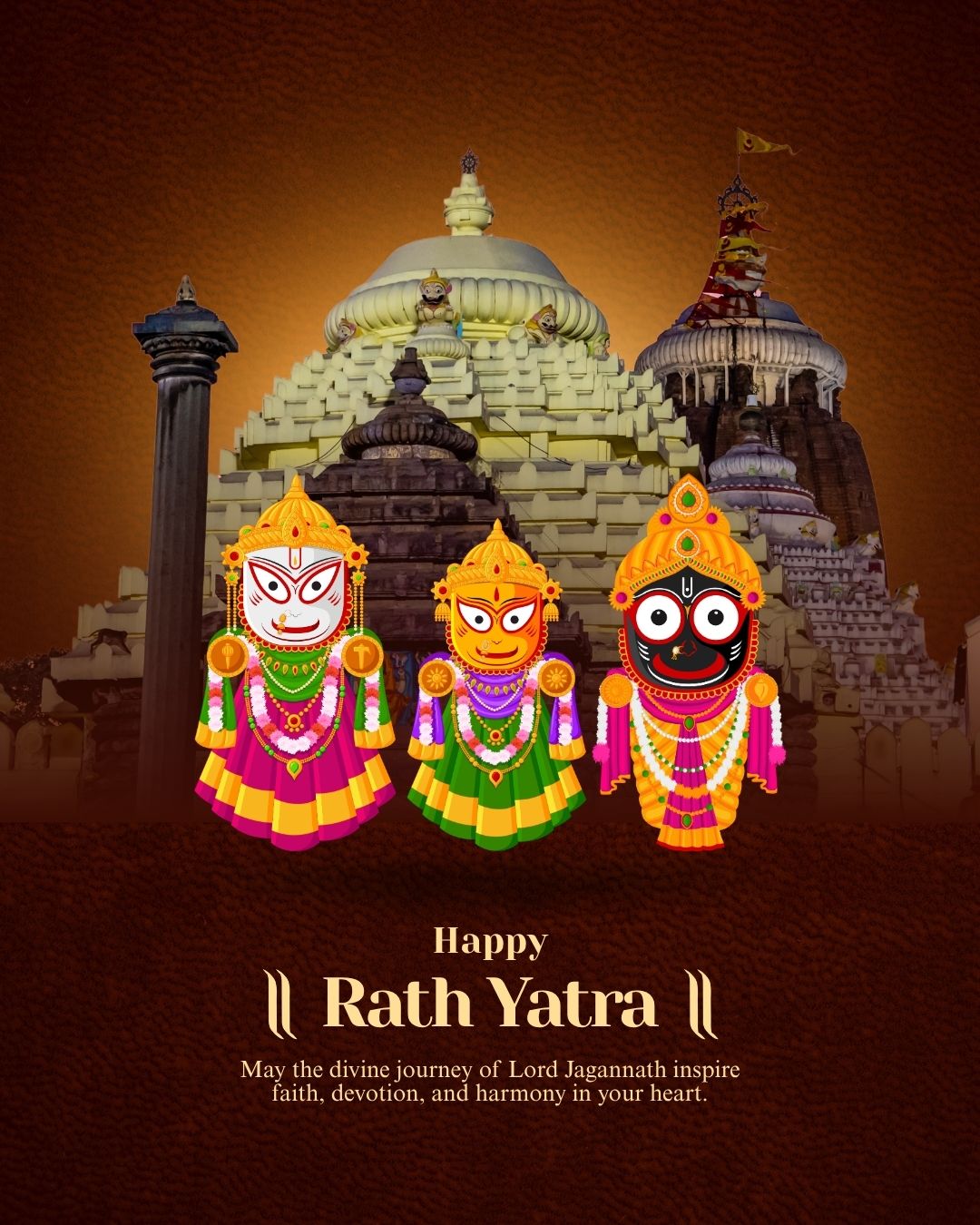
The Jagannath Puri Rath Yatra is one of India’s most sacred and colorful festivals. Every year, millions of devotees gather in Puri, Odisha, to witness the grand procession of Lord Jagannath, Lord Balabhadra, and Goddess Subhadra on beautifully decorated wooden chariots.
Jagannath Puri Rath Yatra 2026 is expected to draw pilgrims and visitors from around the world. The festival symbolizes devotion, equality, and the belief that the Lord comes out of the temple to bless everyone. Pulling the chariots is considered a sacred act that brings spiritual merit and divine blessings.
In this article, you’ll discover the Jagannath Puri Rath Yatra 2026 date, history, significance, rituals, celebrations, interesting facts, quotes and wishes.
Jagannath Puri Rath Yatra 2026 Date & Shubh Muhurat Time
The Jagannath Puri Rath Yatra in 2026 falls on Thursday, July 16, 2026. The Dwitiya Tithi begins at 11:50 AM on July 15 and ends at 8:52 AM on July 16. The grand pulling of the chariots along Puri’s Bada Danda generally begins around 07:00 AM.
The world-famous chariot festival is a multi-day event spanning over a week. Key dates for the 2026 festival include:
- Rath Yatra (Main Chariot Procession): Thursday, July 16, 2026
- Bahuda Yatra (Return Journey): Friday, July 24, 2026
- Suna Besha (Golden Attire): Saturday, July 25, 2026
What is Jagannath Puri Rath Yatra?
The Jagannath Puri Rath Yatra (Festival of Chariots) is an ancient Hindu festival in Puri, Odisha. It celebrates the ceremonial annual journey of Lord Jagannath (a form of Vishnu/Krishna), his brother Balabhadra, and sister Subhadra from their main shrine to the Gundicha Temple, where they reside for a week before returning.
Millions of devotees gather along Puri’s grand avenue (Bada Danda) to pull three massive, newly constructed wooden chariots with thick ropes. The procession includes highly symbolic events and draws massive national and international attention.
History of Jagannath Rath Yatra
The Jagannath Rath Yatra is one of the world’s oldest and largest chariot festivals. Tracing its roots back to the Puranas and ancient Hindu texts, the annual event commemorates the journey of Lord Jagannath, his brother Balabhadra, and his sister Subhadra from the main temple to the Gundicha Temple, where they reside for a week.
Mythological Story and Cultural Significance
- The Gundicha Yatra: Legend dictates that Goddess Subhadra once wished to visit her maternal aunt’s home, the Gundicha Temple. Her brothers, Jagannath and Balabhadra, accompanied her on three magnificent chariots.
- Symbol of Equality: The festival breaks down social barriers. During the Chhera Pahanra ritual, the King of Puri sweeps the chariots with a golden broom, signifying that in the eyes of the divine, everyone is equal regardless of social status.
Historical Evolution
- Ancient Origins: While the lore is rooted in ancient texts, historical accounts and temple inscriptions show that the festival was institutionalized and popularized by King Anangabhima Deva in the 12th century.
- Medieval and Modern Consolidation: Throughout the centuries, the procession survived numerous invasions, with various regional kings actively rebuilding the temple and reviving the festival.
- Global Expansion: In 1967, Srila Prabhupada (founder of ISKCON) introduced the tradition to the West, and the Festival of Chariots is now celebrated in major cities worldwide, including London, New York, and San Francisco.
Significance of Jagannath Rath Yatra
Jagannath Rath Yatra is one of the holiest festivals in Hinduism. It teaches the values of devotion, equality, humility, and unity.
The festival is significant because:
- It symbolizes the Lord coming out to bless everyone.
- Pulling the chariot is believed to bring spiritual merit.
- It promotes equality, as people from all backgrounds join the procession.
- It strengthens faith and devotion among millions of devotees.
- It preserves Odisha’s rich cultural and spiritual heritage.
For devotees, participating in Rath Yatra is considered a sacred opportunity to seek Lord Jagannath’s blessings.
Jagannath Puri Rath Yatra 2026 Rituals
The Jagannath Puri Rath Yatra features several majestic rituals.
The festival officially begins with Snana Purnima (the ceremonial bathing of idols), leading to Anasara (a 15-day seclusion where the deities “rest”). The main event kicks off with Pahandi Bije (rhythmic procession of the deities to the chariots), followed by Chhera Pahanra (the Gajapati King of Puri symbolically sweeps the chariot paths).
The grand procession and the overarching festival proceed through a sequence of highly specific and localized rituals:
Snana Yatra & Anasara
- Snana Purnima: Celebrated on the full moon of the Hindu month of Jyeshtha, the idols are taken to the Snana Bedi (bathing altar) and bathed with 108 pots of sacred, aromatic water.
- Anasara: Following the bath, the deities supposedly catch a fever and retreat to a quarantine chamber. They are hidden from the public while temple artists repaint and restore their colors.
- Nabajaubana Darshan: After the 15-day seclusion, the rejuvenated deities are unveiled to the public on the day just before the Rath Yatra.
The Main Chariot Festival
- Pahandi Bije: A rhythmic, swaying procession where priests carry the idols out of the sanctum sanctorum and install them onto their three massive chariots (Nandighosha for Jagannath, Taladhwaja for Balabhadra, and Darpadalana for Subhadra).
- Chhera Pahanra: Before the chariots are pulled, the Gajapati Maharaja of Puri arrives carrying a golden-handled broom. He sweeps the wooden platforms and scatters flowers and sandalwood water, establishing the belief that everyone is equal in the eyes of Lord Jagannath.
- Pulling of the Chariots: Thousands of devotees gather on the Grand Road to pull the massive chariots to the Gundicha Temple, which is considered the birthplace and “aunt’s house” of the deities.
Return & Concluding Rituals
- Hera Panchami: An emotionally charged ritual that occurs on the fifth day. Goddess Lakshmi, angry at Lord Jagannath for leaving her behind, symbolically visits the Gundicha Temple to search for him, and returns after breaking a part of his chariot.
- Bahuda Yatra: The grand return journey of the deities back to the main Jagannath Temple on their chariots after their nine-day stay.
- Suna Besha: Shortly after their return, the deities are adorned in magnificent gold ornaments and crowns, a dazzling ritual that attracts millions of onlookers.
- Niladri Bije: The concluding ritual where the deities are ceremonially returned to the inner sanctum of the main temple, marking the official end of the Rath Yatra.
The Three Sacred Chariots
Every year, three new wooden chariots are built using traditional methods and sacred rituals.
Nandighosha – Lord Jagannath
- Deity: Lord Jagannath
- Wheels: 16
- Flag: Trailokyamohini
- Main Colors: Red and Yellow
This is the largest chariot and represents divine protection and compassion.
Taladhwaja – Lord Balabhadra
- Deity: Lord Balabhadra
- Wheels: 14
- Main Colors: Red and Green
It symbolizes strength, courage, and righteousness.
Darpadalana – Goddess Subhadra
- Deity: Goddess Subhadra
- Wheels: 12
- Main Colors: Red and Black
This chariot represents kindness, harmony, and divine grace.
One of the most unique traditions of the festival is that new chariots are handcrafted every year, reflecting the timeless customs of Jagannath culture and devotion.
How Jagannath Puri Rath Yatra is Celebrated
Jagannath Puri Rath Yatra is celebrated with immense devotion and joy. The festival begins with the grand procession of Lord Jagannath, Lord Balabhadra, and Goddess Subhadra on their beautifully decorated wooden chariots from the Jagannath Temple to the Gundicha Temple.
Thousands of devotees pull the giant chariots with thick ropes while chanting prayers and singing devotional songs. The streets of Puri come alive with colorful decorations, cultural performances, and spiritual celebrations. Free community meals (Mahaprasad) are also distributed to devotees, reflecting the spirit of equality and service.
Jagannath Rath Yatra Around the World
Although the grandest Rath Yatra takes place in Puri, Odisha, the festival is celebrated in many cities across India and abroad.
Popular celebrations are held in:
- Ahmedabad
- Kolkata
- Mumbai
- Delhi
- Bengaluru
- London
- New York
- Toronto
- Sydney
- Singapore
Many ISKCON temples organize Rath Yatra processions, allowing devotees worldwide to participate in this sacred festival.
Interesting Facts About Jagannath Puri Rath Yatra
The Jagannath Rath Yatra is a massive, centuries-old annual chariot festival in Puri, Odisha. Millions of devotees gather to pull the massive, newly-built wooden chariots of Lord Jagannath, his brother Balabhadra, and sister Subhadra to their aunt’s residence at the Gundicha Temple.
- New Chariots Yearly: Three giant wooden chariots are built entirely from scratch every single year, without a single iron nail.
- Divine Vacation: It symbolizes a vacation for the deities who leave the main temple to stay at their aunt’s house for nine days.
- The King as a Sweeper: During the Chhera Pahanra ritual, the King of Puri dresses as a sweeper to clean the chariot path with a golden-handled broom, symbolizing equality.
- Origin of ‘Juggernaut’: The heavy, unstoppable force of Lord Jagannath’s towering chariot inspired the English word “juggernaut”.
- No Nails Used: The chariots are assembled solely using wooden pegs by a specific lineage of traditional carpenters.
- Height Differences: The chariots have varying heights and wheel counts, with Lord Jagannath’s Nandighosha being the tallest at 45 ft with 16 wheels.
- Social Equality: It is a rare time when devotees of all castes and creeds pull the ropes together and share the Mahaprasad.
- Origin of the Route: The procession is known as Bada Danda, taking the deities down a wide avenue to the Gundicha Temple.
- Return Journey: The return trip after 9 days is called Bahuda Yatra, where special sweet pancakes are offered midway.
- Global Reach: The festival is now celebrated in over 100 major cities worldwide, including New York and London.
Best Places to Witness Rath Yatra
If you want to experience the festival, these are the best places to visit:
Puri, Odisha
The original and most famous Rath Yatra, attended by millions of devotees.
Ahmedabad, Gujarat
One of India’s largest Rath Yatra celebrations after Puri.
Kolkata, West Bengal
Known for vibrant processions and cultural events.
Delhi
Several temples organize grand Rath Yatra celebrations.
ISKCON Temples Worldwide
Cities across the world host colorful chariot festivals inspired by the Puri tradition.
How to Celebrate Jagannath Puri Rath Yatra 2026 at Home
If you cannot visit Puri, you can still celebrate the festival with devotion at home.
Here are a few meaningful ways:
- Offer prayers to Lord Jagannath, Lord Balabhadra, and Goddess Subhadra.
- Decorate your home altar with flowers and lamps.
- Prepare traditional Mahaprasad or simple vegetarian dishes.
- Read stories about Lord Jagannath and Rath Yatra.
- Watch the live telecast of the Puri Rath Yatra.
- Chant devotional hymns such as “Jai Jagannath.”
- Visit a nearby Jagannath or ISKCON temple.
- Donate food, clothes, or essentials to those in need.
Celebrating with faith and kindness is the true essence of Rath Yatra.
Jagannath Puri Rath Yatra 2026 Wishes
- Happy Jagannath Rath Yatra 2026! May Lord Jagannath bless you with happiness, peace, and prosperity.
- Wishing you and your family a joyful and blessed Rath Yatra.
- May Lord Jagannath remove all obstacles from your life and fill it with success.
- May this sacred festival bring love, good health, and endless blessings.
- Let the divine journey of Lord Jagannath inspire hope and positivity in your life.
- May your home be filled with peace and devotion this Rath Yatra.
- Wishing you a spiritually uplifting Jagannath Rath Yatra 2026.
- Jai Jagannath! May the Lord always guide and protect you.
Inspiring Jagannath Rath Yatra 2026 Quotes
“Where there is devotion, Lord Jagannath’s blessings always follow.”
“Faith moves the chariot, and devotion leads the way.”
“Let every step of Rath Yatra bring you closer to peace and happiness.”
“The journey of Lord Jagannath reminds us that God is always close to His devotees.”
“Celebrate Rath Yatra with faith, gratitude, and a heart full of devotion.”
Conclusion
Jagannath Puri Rath Yatra 2026 is a celebration of faith, unity, humility, and devotion. Every year, millions of devotees gather in Puri to witness the grand procession of Lord Jagannath, Lord Balabhadra, and Goddess Subhadra, making it one of the world’s most remarkable spiritual events.
Whether you experience the festival in Puri or celebrate it from home, Rath Yatra reminds us that the divine is accessible to everyone. May this sacred occasion inspire compassion, hope, and positivity in your life.
Jai Jagannath! Happy Jagannath Puri Rath Yatra 2026!
Frequently Asked Questions (FAQs)
1. When is Jagannath Puri Rath Yatra 2026?
The Jagannath Puri Rath Yatra in 2026 falls on Thursday, July 16, 2026.
2. Why is Rath Yatra celebrated?
It marks the annual journey of Lord Jagannath, Lord Balabhadra, and Goddess Subhadra from the Jagannath Temple to the Gundicha Temple.
3. Where is the biggest Rath Yatra held?
The largest and most famous Rath Yatra takes place in Puri, Odisha.
4. Why are new chariots built every year?
According to tradition, fresh wooden chariots are handcrafted each year using sacred rituals and specific types of wood.
5. Who can pull the chariots?
Anyone can participate in pulling the chariots, regardless of caste, religion, or social background.
6. How long does Rath Yatra last?
The festival is celebrated over about nine days, including the return journey known as Bahuda Yatra.
7. Is Rath Yatra celebrated outside India?
Yes. ISKCON and Jagannath temples organize Rath Yatra celebrations in many countries, including the USA, UK, Canada, Australia, and Singapore.