


Introduction
Every year on 11 July, the world observes World Population Day to raise awareness about population-related issues and their impact on society, the economy, and the environment. As the global population grows, challenges such as healthcare, education, food security, employment, and climate change become more significant.
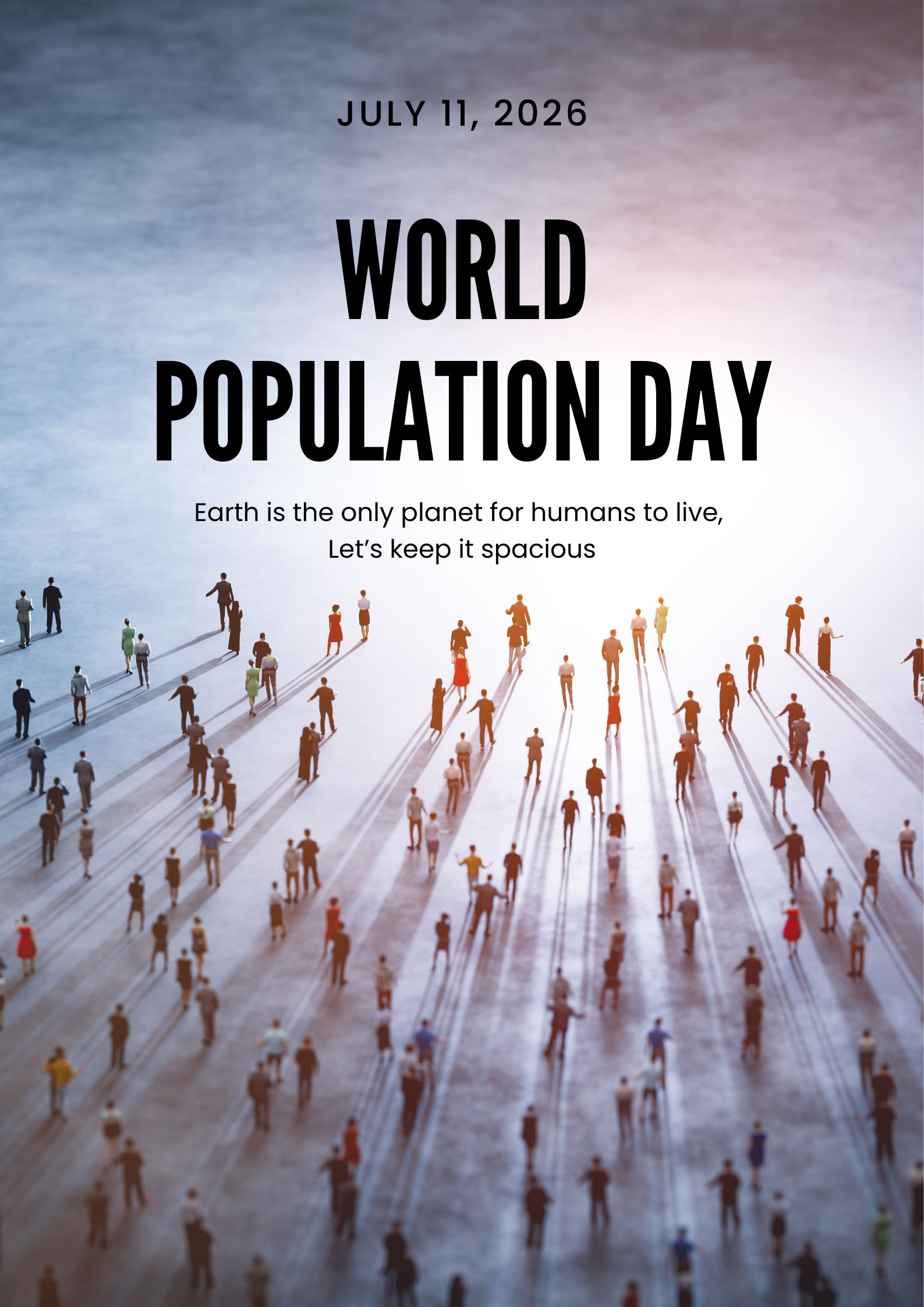
World Population Day 2026, observed on Saturday, 11 July 2026, highlights the importance of responsible population planning, gender equality, reproductive health, and sustainable development. It encourages governments, organizations, and individuals to work together to build a healthier and more balanced future.
In this article, you’ll learn about the World Population Day 2026 date, theme, history, importance, objectives, celebrations, and interesting facts, along with simple ways to take part in this global observance.
What Is World Population Day?
World Population Day is an international observance held every year on 11 July to raise awareness about global population issues. It focuses on topics such as population growth, reproductive health, family planning, gender equality, and sustainable development.
The day encourages people to understand how population trends affect daily life and the future of our planet. Schools, governments, healthcare organizations, and communities organize awareness campaigns, seminars, and educational programs to promote informed decisions and responsible population planning.
World Population Day 2026 Date
World Population Day 2026 will be observed on Saturday, 11 July 2026.
The annual observance brings together people from around the world to discuss population-related challenges and solutions. It also promotes equal access to healthcare, education, and opportunities for everyone.
World Population Day 2026 Theme
The official theme for World Population Day 2026 has not been announced yet.
Each year, the theme focuses on important issues such as reproductive health, women’s empowerment, youth, family planning, or sustainable development. Once released, the official 2026 theme will be updated here.
History of World Population Day
World Population Day was established in 1989 by the Governing Council of the United Nations Development Programme (UNDP). It was inspired by the Day of Five Billion on July 11, 1987, when the global human population officially reached five billion.
Following the success of that milestone, the UN General Assembly formalized the event by resolution 45/216 in December 1990. It was first marked on July 11, 1990, in more than 90 countries.
The day’s history is closely tied to the International Conference on Population and Development (ICPD) held in 1994 in Cairo. During this landmark event, 179 governments adopted a revolutionary Programme of Action, shifting the focus from demographic targets and strict population control to human rights, gender equality, and universal access to reproductive and maternal healthcare.
Over the decades, the global conversation has evolved alongside the population—which surpassed 7 billion in 2011 and 8 billion in 2022. Today, the observance addresses the broader socio-economic and environmental impacts of human growth, focusing annually on themes like:
Why Is World Population Day Important?
World Population Day reminds us that population growth affects every aspect of life. As the number of people increases, so does the demand for food, clean water, housing, healthcare, education, and employment.
The day also highlights the importance of reproductive healthcare, family planning, women’s empowerment, and equal educational opportunities. These efforts help improve living standards while supporting sustainable development and protecting natural resources for future generations.
In addition, World Population Day encourages discussions on climate change, poverty, urbanization, and environmental conservation, inspiring people to work together for a better future.
Objectives of World Population Day
The main objectives of World Population Day are:
- Raise awareness about global population issues.
- Promote reproductive health and family planning.
- Encourage gender equality and women’s empowerment.
- Improve maternal and child healthcare.
- Support quality education for all.
- Promote sustainable development.
- Encourage responsible use of natural resources.
- Inspire communities to participate in awareness campaigns.
Global Population in 2026
The world population in 2026 is approximately 8.3 billion people, according to current demographic estimates. This represents a steady increase from the 8 billion milestone crossed in late 2022.
Global Population Breakdown:
- Growth Rate: The global population continues to grow at a net rate of about 2.7 people every second, balancing around 4.5 births and 1.8 deaths per second.
- Top 3 Most Populous Countries: India remains the most populous country globally with over 1.47 billion people, followed by China, and the United States (around 349 million).
- Regional Growth: Asia remains the largest contributor to global figures, hosting over 4.8 billion people.
Population Challenges Facing the World
Population growth brings both opportunities and challenges. While a growing population can boost economic development, it also increases the demand for essential resources and public services. Some of the major population-related challenges include:
- Food and water shortages
- Climate change and environmental pollution
- Unemployment and poverty
- Limited access to quality healthcare
- Housing and urban overcrowding
- Pressure on natural resources
- Waste management and sanitation
- Inequality in education and opportunities
Addressing these challenges requires effective policies, public awareness, and sustainable development strategies that improve the quality of life for everyone.
How World Population Day Is Celebrated
World Population Day is celebrated across the globe through activities that encourage awareness and education about population issues. Governments, schools, universities, healthcare organizations, and community groups actively participate in the observance.
Common celebration activities include:
- Awareness campaigns and rallies
- Educational seminars and workshops
- Health and family planning programs
- Poster, essay, and slogan competitions
- Tree plantation drives
- Social media awareness campaigns
- Community discussions and public events
These activities help people understand the importance of responsible population growth and sustainable living.
World Population Day Activities for Students
Schools play an important role in spreading awareness about population issues. Students can participate in various educational and creative activities, such as:
- Speech competitions
- Essay writing contests
- Poster and drawing competitions
- Quiz competitions
- Debate sessions
- Slogan writing
- Awareness rallies
- Classroom presentations
- Tree plantation campaigns
- Group discussions on sustainable development
These activities encourage young people to become responsible citizens and contribute to a better future.
Interesting Facts About World Population Day
- Origin: The date was inspired by the “Day of Five Billion” on July 11, 1987, when global population officially hit the 5 billion mark.
- Official Recognition: It was established by the United Nations Development Programme in 1989.
- 8 Billion Milestone: The global population officially surpassed the 8 billion threshold in November 2022.
- India’s Status: India is currently the world’s most populous nation, home to over 1.4 billion people (meaning 1 in 6 global citizens lives in India).
- Regional Dynamics: Over half of the projected global population increase up to 2050 is expected to be concentrated in just a few countries, heavily driven by regions in Africa and South Asia.
- Middle-Class Growth: The global middle class now makes up the majority of the world’s population, with Asia producing a vast majority of new entrants.
- Reproductive Rights: The observance serves as a major platform for global advocates to push for accessible reproductive health care and rights for all people.
World Population Day 2026 Wishes
- Happy World Population Day 2026! Let’s work together for a healthier and sustainable future.
- Every individual matters. Together, we can build a better world.
- Wishing everyone a meaningful World Population Day filled with awareness and responsibility.
- Let’s promote education, equality, and good health for all.
- Small actions today can create a brighter tomorrow.
- Together, we can protect our planet and its resources.
- Spread awareness and inspire positive change this World Population Day.
- Happy World Population Day! Build a sustainable future for generations to come.
World Population Day 2026 Slogans
- Small Steps, Big Impact.
- Population Awareness for a Better Tomorrow.
- Healthy Families, Stronger Nations.
- Educate Today, Sustain Tomorrow.
- Every Life Counts, Every Choice Matters.
- Balance Population, Protect the Planet.
- Together for a Sustainable Future.
- Responsible Choices Build Better Communities.
Conclusion
World Population Day 2026 reminds us that sustainable development depends on creating a balance between population growth and available resources. By promoting education, healthcare, gender equality, and responsible population planning, we can improve the quality of life for people around the world.
Everyone has a role to play—whether by spreading awareness, supporting education, or adopting sustainable habits. Together, we can build a healthier, more inclusive, and environmentally responsible future for generations to come.
Frequently Asked Questions (FAQs)
1. When is World Population Day 2026?
World Population Day 2026 will be observed on Saturday, 11 July 2026.
2. Why is World Population Day celebrated?
It is celebrated to raise awareness about population growth, reproductive health, family planning, gender equality, and sustainable development.
3. Who started World Population Day?
The United Nations Development Programme (UNDP) established World Population Day in 1989.
4. What is the theme of World Population Day 2026?
The official theme has not yet been announced. It will be updated once released.
5. How do schools celebrate World Population Day?
Schools organize speeches, debates, quizzes, poster-making, essay competitions, awareness rallies, and educational programs.
6. Why is population awareness important?
Population awareness helps people understand the importance of responsible resource use, healthcare, education, and sustainable development.
7. How can I participate in World Population Day?
You can join awareness campaigns, attend educational events, share reliable information, support community initiatives, and promote sustainable living.